
Choosing the right cutting technology can have a significant impact on your company's productivity, operating costs, and product quality.
For decades, plasma cutting has been a trusted solution in metal fabrication. However, advances in fiber laser technology have transformed the manufacturing industry, offering new levels of speed, precision, and efficiency.
So which technology is the right choice for your business?
The answer depends on your production goals, the materials you process, and the level of precision your operation requires.
Let's compare both technologies.
What Is Plasma Cutting?
Plasma cutting uses an electrically conductive gas heated to extremely high temperatures to create a plasma arc capable of cutting metal.
It has been widely used across industries because of its ability to cut thick materials quickly while maintaining relatively low equipment costs.
Plasma cutting remains a practical solution for many heavy fabrication applications, particularly when extremely tight tolerances are not required.
What Is Industrial Laser Cutting?
Industrial laser cutting uses a concentrated beam of light to melt or vaporize material with incredible precision.
Modern fiber laser systems can process a wide variety of metals while producing clean edges, tight tolerances, and minimal heat distortion.
Today, laser technology has become the preferred solution for manufacturers focused on efficiency, repeatability, and high-quality production.
Precision
One of the biggest differences between the two technologies is accuracy.
Laser cutting produces extremely clean, precise cuts with minimal edge imperfections, making it ideal for components that require tight tolerances.
Plasma cutting generally produces wider cuts and often requires additional grinding or finishing before parts are ready for assembly.
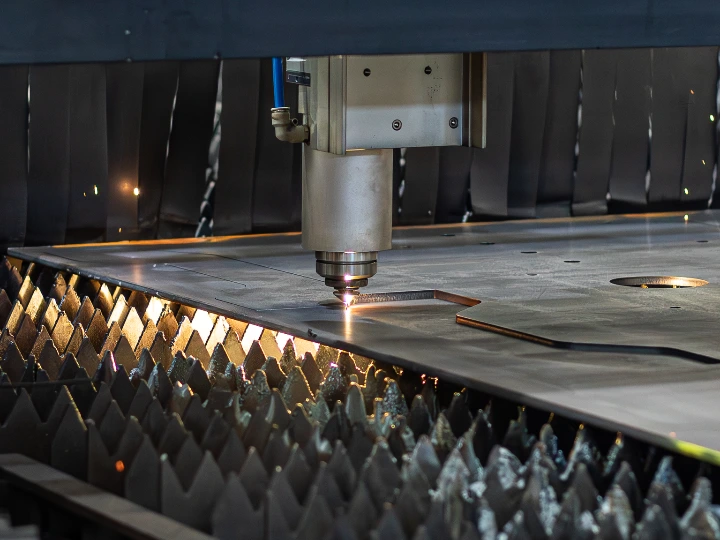
Winner: Industrial Laser Cutting
Speed
When cutting thin to medium-thickness materials, fiber laser systems typically operate much faster than plasma equipment.
Higher cutting speeds allow manufacturers to:
- Increase production capacity
- Reduce lead times
- Complete more jobs each day
For extremely thick materials, plasma may still offer competitive performance depending on the application.
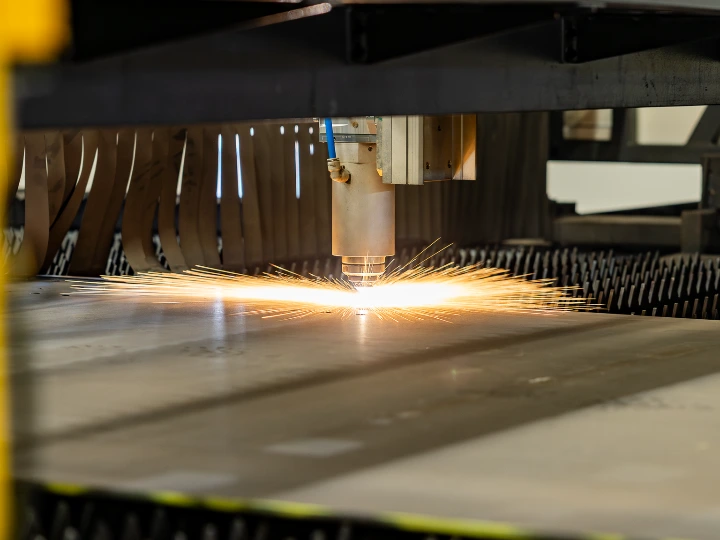
Winner: Fiber Laser (for most manufacturing applications)
Edge Quality
A cleaner cut means less secondary processing.
Laser-cut parts often require little or no post-processing before welding, painting, or assembly.
Plasma-cut components may require additional grinding or finishing depending on the material thickness and quality requirements.
Less finishing means:
- Lower labor costs
- Faster production
- Better consistency
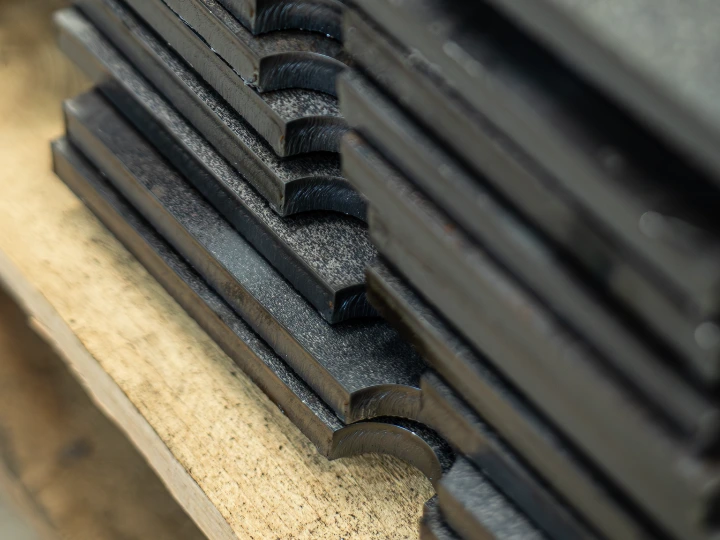
Winner: Industrial Laser Cutting
Material Waste
Laser technology uses advanced nesting software that maximizes material utilization.
By placing parts closer together, manufacturers can significantly reduce scrap and improve material efficiency.
Lower waste means lower production costs.
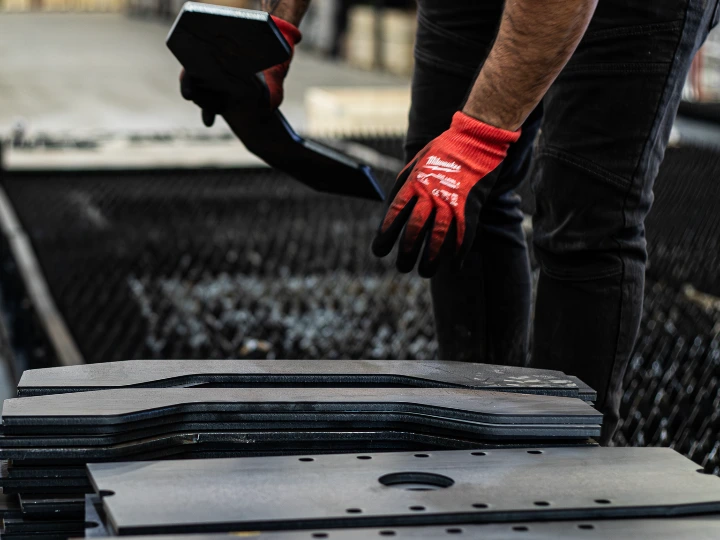
Winner: Industrial Laser Cutting
Operating Costs
Although fiber laser systems typically require a higher initial investment, many companies experience lower operating costs over time through:
- Reduced labor
- Less material waste
- Higher production speed
- Lower maintenance
- Fewer secondary operations
For businesses focused on long-term growth, laser technology often delivers a stronger return on investment.
Which Industries Benefit Most?
Fiber laser technology has become increasingly popular in:
- Trailer Manufacturing
- Automotive Industry
- Agricultural Equipment
- Metal Structures
- Machinery Manufacturing
- Metal Fabrication
- Industrial Manufacturing
These industries require consistent quality, repeatability, and efficient production processes.
Which Technology Should You Choose?
If your primary goal is producing high-quality parts quickly while reducing waste and increasing efficiency, industrial laser cutting is often the better long-term investment.
However, every manufacturing operation is different.
The right solution depends on:
- Material type
- Material thickness
- Production volume
- Quality requirements
- Future growth plans
Working with an experienced equipment provider can help ensure you invest in the technology that best fits your operation.
The Future of Manufacturing
Manufacturers today face increasing pressure to produce more, waste less, and deliver higher-quality products in shorter timeframes.
Industrial laser technology helps companies meet these challenges by combining precision, speed, and automation into a single manufacturing solution.
At GearMax Pro, we provide advanced industrial laser systems designed to help businesses improve productivity, reduce operating costs, and prepare for the future of manufacturing.
Ready to Upgrade Your Production?
Whether you're replacing existing equipment or investing in laser technology for the first time, our team is here to help.
Contact GearMax Pro today to learn more about our industrial laser solutions and discover which system is the right fit for your business.