
When building or repairing a dump trailer, one of the most important technical decisions is choosing the right hydraulic lift system. An undersized hoist kit or an installation with the wrong geometry can lift slowly, bend the frame, overload the 12V hydraulic power unit, or contribute to a rollover when unloading heavy materials on uneven ground.
Two common systems for lifting steel dump bodies are scissor hoist kits and telescopic hydraulic cylinders. Here’s how each works, what advantages it offers, and where it typically fits on trailers ranging from 8 to 24 feet.
1. Scissor Hoist Kits: Structural Rigidity and High Initial Lifting Force
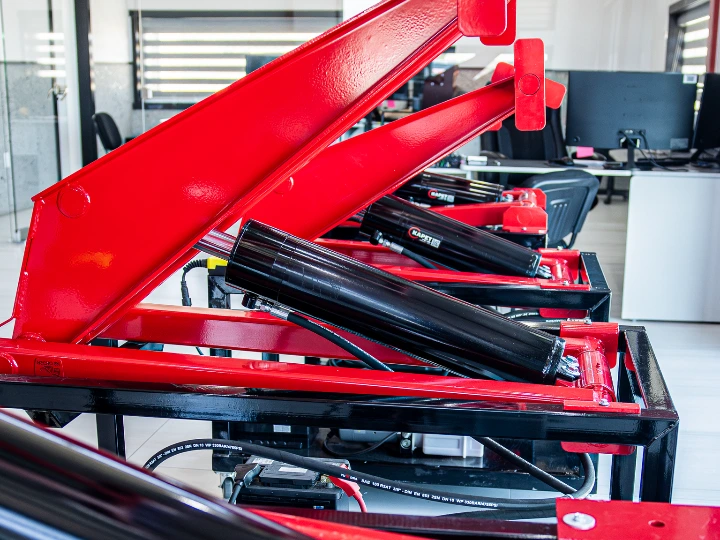
A dump trailer scissor hoist uses hinged steel arms driven by one or two hydraulic cylinders mounted beneath the center of the subframe.
How does it work?
The hydraulic power unit sends pressurized fluid to the cylinder. As the cylinder extends, it opens the scissor linkage, which provides mechanical leverage to lift the dump body from below.
Key advantages
- High initial lifting force. The linkage provides leverage at the start of the lift, when the loaded body is still down.
- Structural rigidity. The steel linkage helps guide the dump body as it rises and can help limit twisting or side-to-side movement during unloading.
- Compact design. The hoist sits below the trailer floor, leaving the front of the dump body clear.
Which trailers is it suited for?
Scissor hoists are commonly used on short and midsize dump trailers. The original guide identifies trailers from 8 to 16 feet with payloads of 3 to 10 metric tons as a typical application range.
2. Telescopic Hydraulic Cylinders: Long Stroke and High Lifting Force
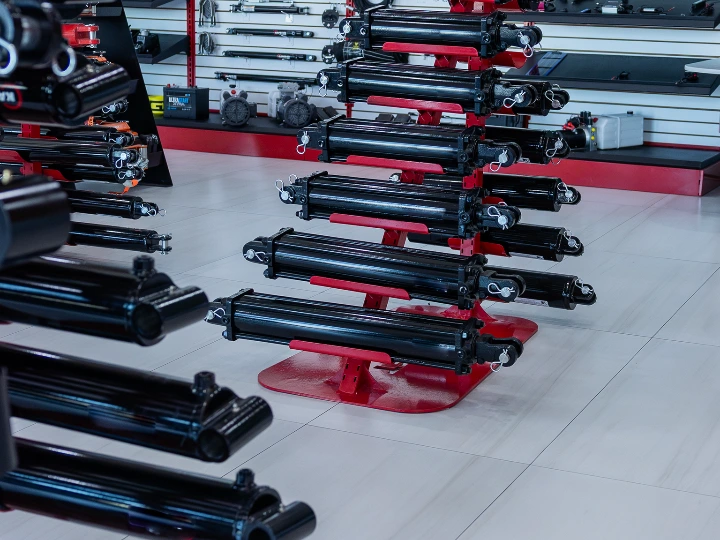
A telescopic cylinder has several nested stages, typically two to five, that extend in sequence. This gives the cylinder a long stroke while keeping it compact when fully retracted.
How does it work?
A front-mounted telescopic cylinder is usually installed at the front of the dump body. By applying force farther from the rear hinge, it takes advantage of a longer lever arm.
Key advantages
- Potentially lower lifting force requirements. Depending on the geometry, applying force at the front can reduce the cylinder force needed to raise the same load compared with a center-mounted setup. Required hydraulic pressure also depends on cylinder size.
- Less weight from the lift mechanism. A telescopic setup eliminates the need for a heavy scissor linkage. A lighter assembly may leave more room for payload within the trailer’s rated limits.
- A steeper dump angle. Some configurations can reach 48° to 50°, which can help materials such as clay or hot asphalt release from the body.
Which trailers is it suited for?
Front-mounted telescopic cylinders are often used on larger dump bodies and semitrailers, including configurations from 14 to 24 feet or longer. The original guide also lists modified livestock bodies as a possible application.
3. Scissor Hoist vs. Telescopic Cylinder: At a Glance
The ranges below are comparison points, not sizing specifications. For either system, follow the trailer manufacturer’s instructions and unload on firm, level ground.
Front-mounted telescopic cylinder
Typical body length in this guide
8–16 ft for short and midsize bodies
14–24+ ft for longer, heavier bodies
Mounting location
Beneath the body, on the central subframe
At the front of the dump body
Where lifting force is applied
Under the body through the scissor linkage
At the front, farther from the rear hinge
Lateral stability
The rigid linkage helps guide the body
Depends on the body, frame, and overall setup
Typical dump angle in this guide
40°–45°
45°–50°
Maintenance focus
Lubricate bushings and pins as specified
Inspect seals at each stage
Feature
Scissor hoist kit
4. What to Check Before Choosing a Dump Trailer Hoist Kit
Whether you’re shopping for a hydraulic cylinder for a 14-foot trailer or a complete hoist kit, consider these three factors:
- The material you haul. Dense loads such as rubble, rock, and sand place different demands on a dump body than grain or compost. Consider the weight of the loaded body, how the load is distributed, and how readily the material releases when tipped.
- The 12V or 24V hydraulic power unit. A multi-stage cylinder may require more oil to reach full extension. Confirm the usable reservoir volume, pump flow, and operating pressure for your specific cylinder. Reservoir capacity is measured in liters or gallons; pump flow is measured in gallons per minute (GPM).
- The frame and mounting layout. Confirm there’s enough space for the scissor hoist and its mounting brackets, or that the front structure can support a telescopic cylinder. Have a qualified installer verify the mounting points and any reinforcement needed.
Find the Right Equipment for Your Project
Choosing a hoist that matches your dump body, load, and frame can help reduce unnecessary downtime. Whether you need a complete scissor hoist kit with a 12V power unit or a heavy-duty telescopic cylinder, GearMax Pro offers OEM-quality replacement parts with shipping throughout Mexico.
Need help choosing a system? Browse our dump trailer hoist kits and hydraulic parts, or contact GearMax Pro for technical guidance and wholesale pricing for manufacturers and repair shops.